Exam Review
- Who is accredited for the discovery of penicillin?A)FlemingB)EhrlichC)PasteurD)Lister
- Who is accredited for establishing hygiene standards in healthcare settings?A)Louis PasteurB)Robert KochC)Rudolf VirchowD)Florence Nightingale
- The ability to respond to a stimulus is an example ofA)order of complexityB)sensitivityC)evolutionD)homeostasis
- The purpose of Koch's postulates was toA)determine the type of yeast that would produce the best tasting wine.B)determine why milk spoils.C)disprove spontaneous generation.D)prove the identity of the microbe that caused a disease.
Exam Review
- Development refers toA)the process of producing more cellsB)the process of producing larger cellsC)the process of responding to environmental changesD)the process of changing from an original form to a final form
- The first step in the scientific method isA)collect data.B)draw conclusions.C)state a hypothesis.D)make an observation.E)design an experiment.
- All of the following describes enzymes, exceptA)enzymes are made of proteinB)enzymes can be denaturedC)enzymes can only work one timeD)enzymes can be found in biological organisms
- An acid isA)a compound that removes H+ ions from a solutionB)a compound that releases OH- ions into a solutionC)a compound that releases H+ ions into a solution
Exam Review
- The chemical reaction that uses water to break a covalent bond is called a ________ reaction.
A 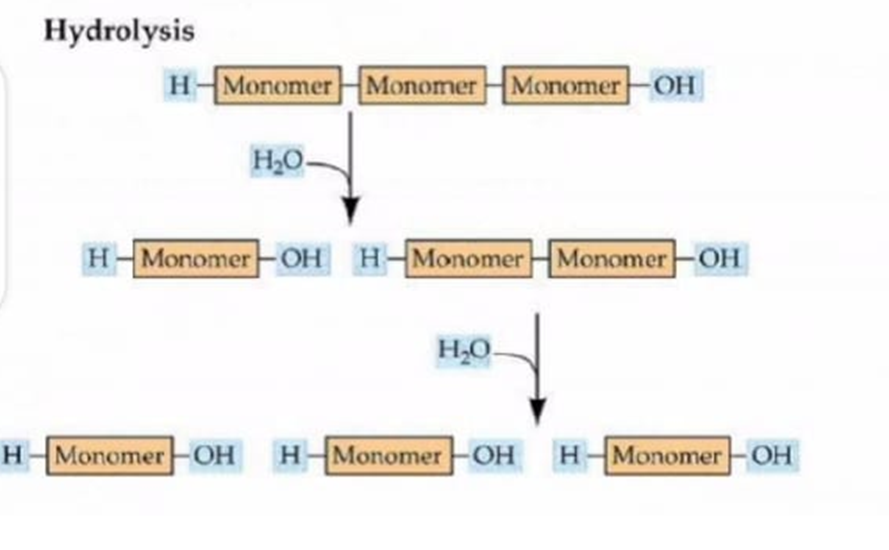 A)aquaticB)hydrolysisC)dehydration (or condensation)D)hydratic
- All of the following describe(s) an enzyme, exceptA)An enzyme speeds up a chemical reaction in living organisms.B)An enzyme is a biological catalyst.C)An enzyme reacts with the reactants and becomes part of the products.D)An enzyme is specific to the chemical reaction it catalyzes.
- A solution maintains a pH of 4 even when some base is added to it. This means the solution isA)waterB)a bufferC)an alcoholD)organic
- A buffer is a solution that maintains a pH of 7.A)TrueB)False
Exam Review
- Which structure protects bacteria from being phagocytized?A)slime layerB)fimbriaeC)cell membraneD)capsule
- Which of the following organelles is found in both prokaryotes and eukaryotes?A)MitochondriaB)RibosomesC)NucleusD)LysosomesE)All of the above
- Lipid AA)is found in the outer membrane of Gram-negative bacteriaB)is considered an endotoxinC)can cause fever, inflammation, and blood clotting in patientsD)All of the above
- Mycoplasmas are pleomorphic because theyA)have no cell walls.B)produce endospores.C)exhibit snapping division.D)have sterols in their cytoplasmic membranes.
Exam Review
- A microbial species is able to survive in near freezing temperatures. Its cell membrane is able to stay fluid at such temperatures becauseA)it has sterols (like cholesterol) in its membraneB)it has a higher amount of protein in its membraneC)it has a thicker glycocalyxD)it has a thick cell wall
- Which bacterial genus normally lacks a cell wall?A)StaphylococcusB)BacillusC)MycoplasmaD)Clostridium
- The function of bacterial endospores isA)conversion of gaseous nitrogen to a usable form for plants.B)reproduction and growth.C)protection of genetic material during harsh conditions.D)storage of excess cell materials.E)as sites for photosynthesis
- The bacteria in this image would be consideredA)streptobacilliB)streptococciC)staphylococciD)palisades
Exam Review
- Which of the following is found in prokaryotic cells?A)mitochondriaB)lysosomesC)ribosomesD)All of the above
- Peptidoglycan is a unique macromolecule found in bacterialA)cell walls.B)cell membranes.C)capsules.D)slime layers.E)inclusions.
- Organisms have been discovered that were trapped in amber for thousands of years, but were able to grow when placed on nutrient media. This is explained byA)the organisms formed endospores.B)amber is a great source of nutrients.C)the organisms were prions.D)some organisms have a generation time that lasts thousands of years.
- What two categories of fungi cause human diseases?A)primary and secondaryB)primary and vegetativeC)opportunistic and primaryD)secondary and opportunisticE)vegetative and reproductive